Cobalt Detail Dual-Ended Edge Styling Brush with a Fine-Tooth Comb and Slim Grip
Cobalt Detail Dual-Ended Edge Styling Brush with a Fine-Tooth Comb and Slim Grip
Couldn't load pickup availability

Cobalt Detail Dual-Ended Edge Styling Brush with a Fine-Tooth Comb and Slim Grip
🖌️ Small Sections Deserve Their Own Tool
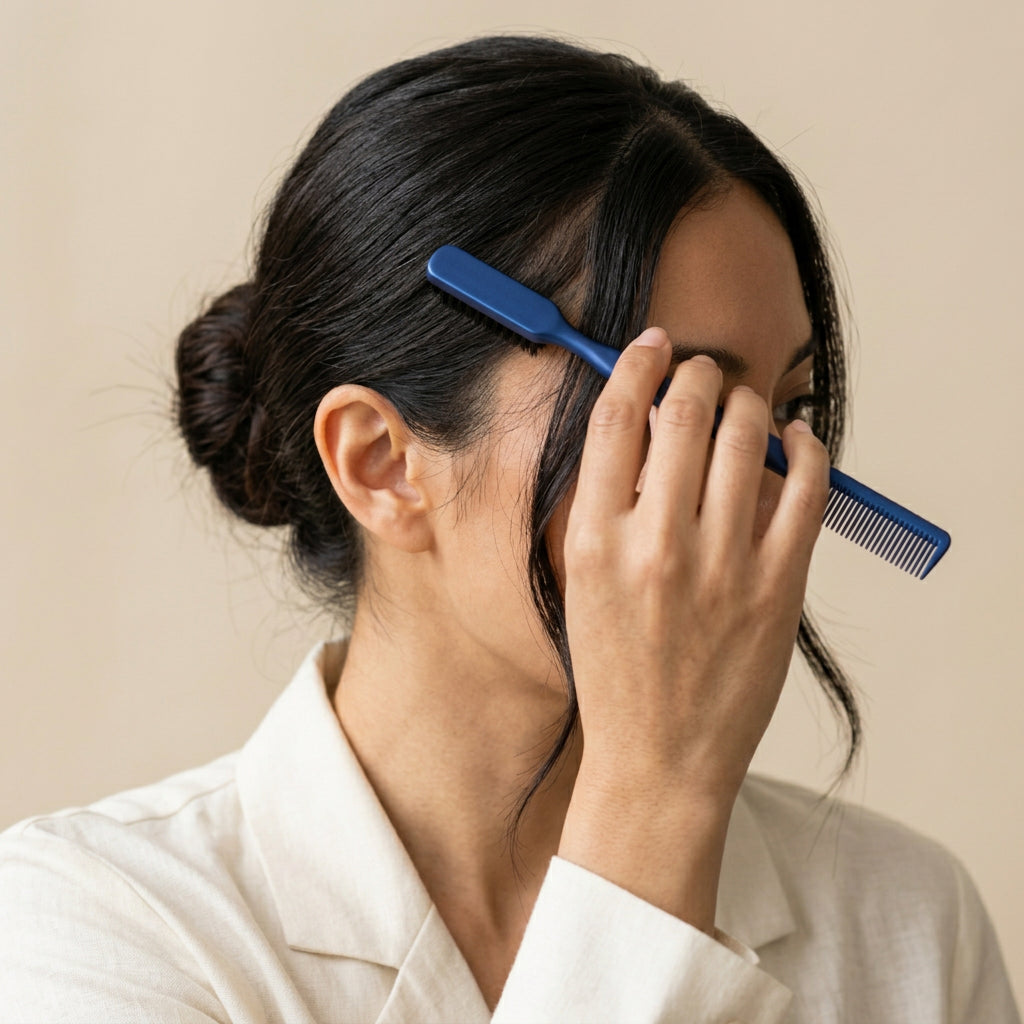
The main shape of your style may already be in place. What remains is the detail: a small section near the temple, a few strands along the hairline, a curve you want to arrange without bringing a large brush across the whole area. The Cobalt Detail Dual-Ended Styling Brush is designed around that smaller scale, with a narrow bristle head at one end and a compact fine-tooth comb at the other.
Between them sits a slim cobalt-blue grip. The color is expressive, but the form stays disciplined: one body, two working ends, no detachable pieces and no extra pointed tail. On a light counter, the deep blue and dark bristles form a clear silhouette. In the hand, the two ends give you a choice of movement without putting down one tool to find another.

Two Ends, Two Different Ways to Arrange
The bristle end has a narrow rectangular base holding short dark bristles. Its small working surface lets you concentrate on a selected area rather than sweeping over the entire side of the head. Use it to guide a few prepared strands in a chosen direction, keeping your movement light and your view of the section clear.
The comb end has a compact row of fine cobalt teeth, continuing the color of the grip. It offers a different kind of separation and arrangement from the bristles. Turn the tool to use the end that suits the step you are on, rather than pressing harder with the wrong surface because it is already facing the hair.
Start with a Decision, Not a Product Buildup
Before touching the hairline, decide what you want the small section to do. Are you guiding it back toward an existing updo, bringing it toward a parting or arranging a gentle curve? Defining that intention first helps you use fewer repeated passes. You do not need to arrange every short strand, and leaving some texture visible can be a deliberate choice.
If you use an edge styling product, apply it according to its own instructions and begin with an amount appropriate to your hair. This tool does not include gel, wax or another formula, and it does not change a formula's directions. More product and more pressure are not automatic substitutes for a clear section and a controlled movement.
The Detail Routine: Separate, Guide, Refine
- Keep the main style clear. Gather or move the surrounding lengths away from the small area so they do not repeatedly fall into the working section.
- Select what you want to arrange. If the hair is ready for fine combing, use the comb end gently to organize a small amount. Do not force its teeth through a knot.
- Turn to the bristles. Hold the central grip so the brush head can meet the section at a comfortable angle, with the comb end directed safely away from the eyes.
- Use short movements. Guide the strands along the direction you chose. Stop after a few passes to assess the shape rather than brushing continuously.
- Refine only where needed. Change ends or adjust the section if useful, then leave the area alone once it is arranged to your preference.

The Difference Between Definition and Tension
A detail tool should not become a way to pull the hairline more tightly. Keep pressure light, avoid dragging repeatedly over tender skin and stop if the section catches. The front and temple areas deserve careful handling, particularly where the hair is short, delicate or already held under tension by the main style.
If a strand does not lie where you want, reconsider the amount you have selected or the direction you are asking it to take. You may get a more comfortable result by changing the curve rather than increasing pressure. Do not use the comb teeth to scrape product from the skin or the bristle base to press a section flat.
Three Situations, Three Adjustments
Finishing a gathered style: work on the small area only after the main arrangement is comfortable. Guiding the surface should not tighten a ponytail or bun that already pulls at the hairline.
Working near a side parting: keep the selected strands distinct from the longer section above them. A small view of the area in a mirror can be more useful than repeatedly brushing a larger patch.
Preserving natural texture: decide how much definition you actually want. This is an arrangement tool, not a requirement to flatten every curl or short strand. Hair texture and any separately chosen styling product influence how the result looks and how long it lasts.
What Makes It a Detail Tool
The bristle surface and comb are both narrow, and the grip is proportioned around small movements. That is different from a broad paddle brush, a round barrel or a wide-tooth comb. It is not intended to detangle all the hair from roots to ends or form a large curl on its own.
The tool is fully manual. There is no heater, battery, vibration setting or hidden dispenser in the body. Its appeal is the directness of choosing an end, placing it carefully and seeing the section you are arranging. The cobalt finish adds a strong visual identity without adding complexity to that process.

Clean Both Ends, Even If You Favor One
After styling, remove loose strands from the bristles and comb teeth gently. Look for residue close to the bristle base, where it may be less obvious than along the outer tips. Avoid picking at the base with a sharp object or pulling bundles of bristles to remove trapped hair.
Use a gentle cleaning approach appropriate to any styling product you have used and follow supplied care directions. Rinse away residue where appropriate, then allow the tool to dry fully with air around both working ends. Do not press the bristles flat beneath another object or return a wet tool to closed packaging.
A Precise Presentation
Included is one cobalt dual-ended styling brush, presented in a plain narrow ivory fitted box. Styling formulas, additional combs and countertop props are not included. Store it with space around the bristle head and fine teeth, away from direct heat and heavy tools.
Is it a two-piece set? No; both ends belong to one continuous tool. Is styling product included? No. Does it guarantee a fixed hold time? No; the hair, method and any separate formula influence the result. Choose it for a considered finishing step, where a small surface and a deliberate movement matter more than a bigger brush.